

Addo Elephant Park Self-Drive Guide: Roads & Wildlife
Date Published
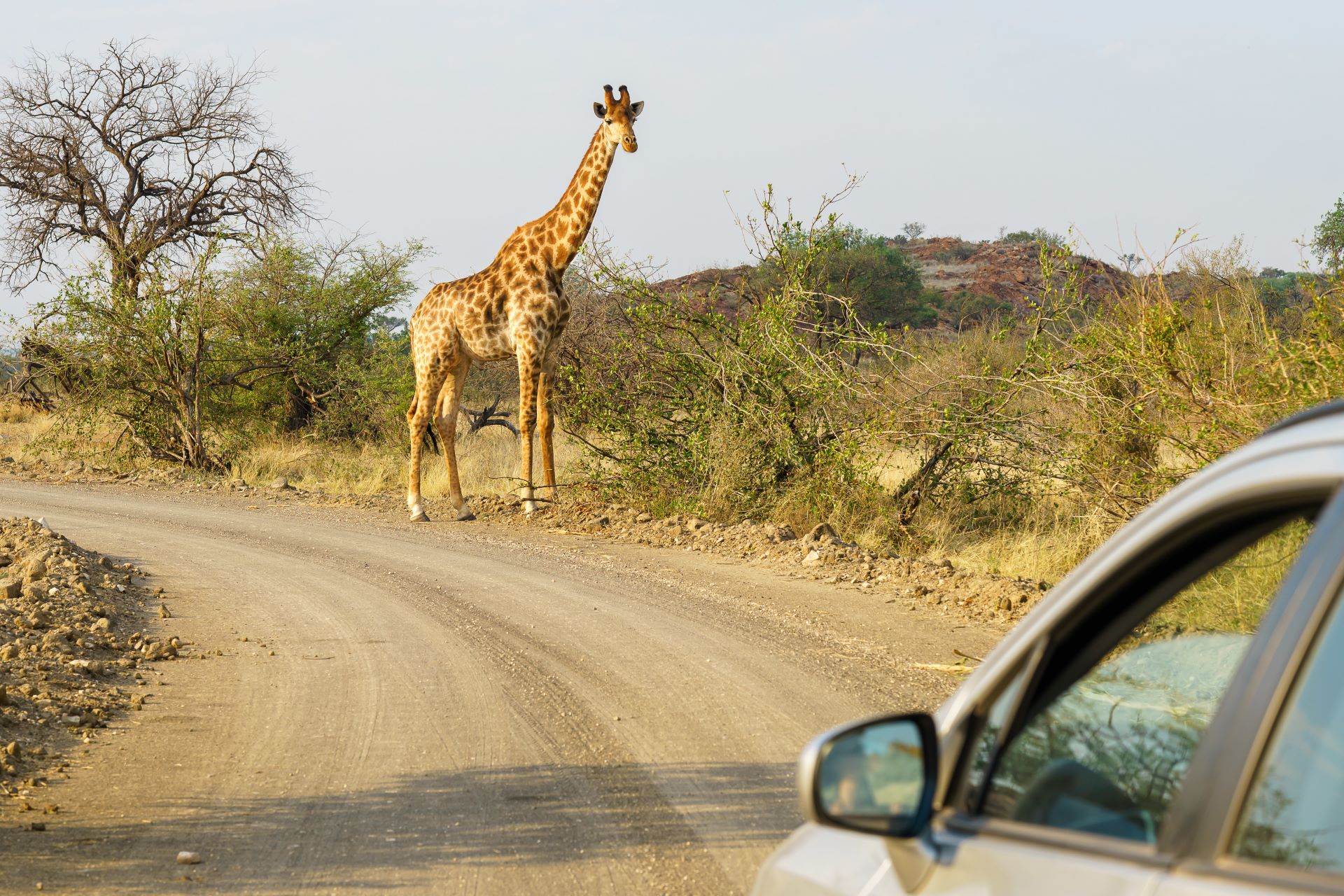
There are safari experiences that ask you to lean back and surrender control. Then there are the ones that invite you to grip the wheel, map your curiosity, and follow dust-laced roads into wild uncertainty. The self-drive journey through Addo Elephant National Park belongs firmly to the second category.
This is not a zoo behind fences, nor a curated parade of predictable sightings. It is a living, shifting ecosystem stitched together by gravel, tar, salt bush, and silence. Every bend in the road holds the possibility of an elephant emerging like a moving monument from the thickets, or a distant antelope freezing in the heat shimmer like a mirage that learned to breathe.
For South African travellers and international visitors alike, Addo offers something rare: a Big Five experience designed for independent exploration. But to understand how to unlock it properly, you need to understand three things intimately: the road layout, the animal density patterns, and the timing logic that governs movement across this vast protected landscape.

The Shape of the Park: Reading Addo’s Road Logic
Addo is not designed like a straight-line safari circuit. It is more like a branching conversation between landscapes. The main game viewing area is a looped system of gravel and tar roads that snake through dense thicket, open plains, and scattered waterholes.
Most self-drive visitors begin their journey near the main entrance gate close to the Colchester side of the park. From here, the road system quickly reveals its personality: structured enough to guide you, but unpredictable enough to keep you alert.
The central loop roads are the backbone of the experience. They are well-maintained gravel routes that connect key viewing zones where elephant activity is most consistent. Unlike some parks where roads feel like corridors, Addo’s network often opens into wide circular sections, allowing slow cruising and repeated passes through high-activity areas.
A defining feature of the layout is how it funnels traffic toward water sources. Artificial and natural waterholes act as gravitational centres. Roads often arc toward them, pause near them, and then drift away again like reluctant storytellers. If you understand this pattern, you begin to read the park not as a map, but as a rhythm.
There are also secondary roads that feel quieter, almost like side thoughts. These are where kudu might step out of dense spekboom thickets or where tortoises cross with deliberate indifference to human schedules. Many visitors underestimate these quieter stretches, but they often deliver the most intimate sightings.
The terrain itself plays a role in navigation. The thicket biome is thick, tangled, and visually limiting. You rarely see far ahead, which makes every corner a small reveal. In contrast, open plains near the northern sections allow long-range scanning, especially useful for spotting distant elephant herds moving like slow weather systems across the horizon.
Elephant Density: Why Addo Feels Alive with Giants
The defining feature of Addo is right in its name. This is elephant country in its most expressive form.
What makes the experience unique is not just the presence of elephants, but their density and behavioural visibility. Addo Elephant National Park is home to one of the most concentrated elephant populations in South Africa, and this shapes every moment of the self-drive experience.
Unlike more open savannah parks where sightings are occasional and widely spaced, Addo often delivers multiple elephant encounters in a single loop. Herds can range from small family units of five or six individuals to larger gatherings that seem to occupy entire sections of road space with slow, deliberate authority.
What you quickly learn is that elephants are not random here. They follow memory lines. These invisible pathways connect feeding zones, water points, and shaded resting areas. The roads frequently intersect these routes, which is why elephants often appear as if they are already part of the infrastructure.
The density does not mean chaos, however. It means layering. In one stretch of road you may see feeding elephants close to the verge, while further ahead another herd crosses the track, and in the distance dust rises from a third group moving toward water.
This layered presence creates a sense of continuity rather than surprise. Instead of chasing sightings, you feel as though you are moving through an ongoing elephant narrative.
Other wildlife follows different density patterns. Buffalo tend to gather in heavier clusters near water sources. Zebra and warthog often appear in transitional zones between open and closed habitats. The smaller antelope species, like bushbuck and duiker, prefer the denser thickets where visibility is reduced and movement feels more secretive.
Predators exist in the system, but they are more elusive. Lion sightings occur, but they are not the daily currency of Addo in the same way they might be in other parks. This shifts the emotional tone of the drive from high-alert predator scanning to a more grounded appreciation of herbivore dynamics and ecosystem behaviour.
Timing the Park: When Roads Become Stories
Timing in Addo is not just about opening gates or closing hours. It is about understanding when the landscape itself becomes most legible.
Early morning is when the park feels freshly written. The roads are cooler, the light is angled low, and animal movement is more purposeful. Elephants are often on the move between feeding and resting zones, which increases crossing activity on main loop roads. This is one of the most rewarding times for self-drivers, especially along sections where multiple roads intersect near water points.
Midday introduces a shift in tone. Heat settles into the thicket, and movement slows. Elephants often gather in shaded areas, becoming more stationary and social. While sightings remain frequent, they require more patience. This is the time when visitors begin to understand that Addo is not a fast safari experience. It rewards those who are willing to wait inside the vehicle, watching small changes in posture, ear movement, or dust disturbance.
Afternoon brings a second wave of activity. As temperatures begin to soften, animals return to movement. Roads that felt quiet at midday can suddenly become active corridors again. This is particularly true near water sources, where late-day drinking behaviour creates predictable congregation points.
The final hour before gate closure often feels like a closing chapter. Elephants move with a sense of directionality, returning toward overnight resting zones. The roads feel less like exploration routes and more like guided pathways following invisible currents.
Seasonality also shapes timing. In the hotter months, water dependency increases, making sightings more concentrated around dams and artificial waterholes. In cooler months, movement spreads more evenly across the park, reducing predictability but increasing exploratory opportunities.
Road Conditions and Driving Experience
Driving in Addo is less about technical difficulty and more about attentiveness. The main roads are well-maintained and suitable for standard vehicles, which makes it one of the most accessible self-drive safari destinations in South Africa.
Gravel surfaces dominate much of the network. They are generally compacted and manageable, though they require careful cornering and speed discipline. The park encourages slow driving not only for safety but for experience. At lower speeds, the landscape reveals itself in layers: the sudden flicker of movement in the bush, the shifting outline of an elephant behind spekboom, the subtle change in bird alarm calls that often precede larger sightings.
Some routes become corrugated over time, especially in high-traffic zones. These sections can create a gentle vibration in the vehicle, but they rarely pose risk. Instead, they reinforce the sense that the park is actively used by both wildlife and visitors.
Signage is clear but minimal. This is intentional. Addo does not overwhelm drivers with direction. Instead, it encourages familiarity through repetition. After a few loops, visitors begin to recognise intersections not by signs but by visual memory: a distinctive tree shape, a bend where elephants were seen earlier, or a waterhole that always seems to attract movement at certain hours.
Fuel and supplies are available near the main camp area, but once inside the game viewing sections, there are no commercial facilities. This reinforces the self-contained nature of the experience.
Reading the Wildlife Patterns Like a Local
The real skill in Addo self-driving is not navigation. It is interpretation.
Elephants are the most visible teachers. Their movement patterns reveal the underlying structure of the park. If a herd crosses a road at a particular time of day, there is often a repeatable logic behind it. Feeding cycles, social interactions, and temperature shifts all play a role.
Buffalo often behave like slow-moving shadows near water sources. Their presence is usually detectable before they are visible, through birds scattering or vegetation shifting unnaturally.
Smaller antelope species are more erratic. They tend to appear suddenly and vanish quickly, often using the thicket as a protective curtain.
Birdlife adds another layer of interpretation. Alarm calls are particularly useful indicators. A sudden burst of vocalisation often signals predator movement or elephant approach. Learning to listen becomes just as important as learning to look.
Over time, visitors begin to notice that the park is not random. It is patterned. Not predictable in a mechanical sense, but structured in ecological logic.
Best Routes for First-Time Self-Drivers
While the park encourages exploration, most first-time visitors naturally gravitate toward the central loop systems near the main game viewing area. These routes offer the highest probability of elephant sightings and provide a balanced introduction to Addo’s ecosystems.
A typical first loop might include waterhole circuits, open plain sections, and thicket crossings. Each segment offers a different visual and behavioural experience, making it ideal for orientation.
Secondary loops branching off from the main circuit often provide quieter moments. These are where patience pays off. You might spend several minutes without movement, only to suddenly encounter a herd emerging from dense vegetation as if it had been waiting for the right moment to appear.
The northern sections of the park introduce more open landscapes. These areas are particularly rewarding during early morning or late afternoon when light enhances visibility and long-distance scanning becomes more effective.
Mistakes That Quietly Break the Experience
One of the most common mistakes visitors make is driving too quickly. Addo is not designed for speed. The slower you move, the more the park reveals.
Another subtle mistake is over-focusing on distant sightings. Many of the most memorable encounters happen close to the vehicle, sometimes within arm’s reach of the road edge. Attention that is always fixed on the horizon can miss the richness unfolding nearby.
Ignoring timing is another missed opportunity. Arriving too late in the morning or leaving too early in the afternoon can compress the experience into its least active windows.
Finally, treating the park as a checklist destination reduces its depth. Addo is not about ticking off species. It is about observing behaviour, movement, and ecological interaction.
The Emotional Texture of Addo’s Self-Drive Experience
There is a particular emotional rhythm to driving through Addo Elephant National Park that distinguishes it from many other safari destinations.
It is not built on constant adrenaline or rare sightings. Instead, it is built on continuity. Elephants become companions on the road rather than fleeting appearances. Roads feel less like routes and more like shared spaces.
There is a moment, often unexpected, when the park stops feeling like a destination and starts feeling like a conversation. The vehicle becomes a quiet observer moving through a living system that is entirely indifferent to human schedules.
That is the essence of Addo. Not spectacle, but presence.

Driving Through Living Geography
A self-drive safari in Addo is ultimately an exercise in attention. The roads guide you, but they do not define what you see. The elephants shape your experience, but they do not perform for it. The timing sets the pace, but the park itself writes the story.
For South African travellers, it is one of the most accessible ways to experience a true Big Five environment without needing a guided vehicle. For international visitors, it is an entry point into the complexity and generosity of Eastern Cape wilderness.
What remains after the dust settles is not a list of sightings, but a memory of movement: elephants crossing sunlit roads, wind threading through spekboom, and the quiet understanding that the landscape was never empty, only waiting to be read properly.
And once you have learned to read it, every road feels like a sentence still being written.

The Addo Elephant National Park is a protected area located in the Eastern Cape province of South Africa. It is home to a variety of wildlife, including elephants, lions, buffalo, and many other species. The park is known for its elephant conservation efforts, and visitors can see these majestic animals up close on guided game