

Choosing the Right Safari Vehicle Experience
Date Published
Where Logistics Shape the Wild
A safari in South Africa is never just about the animals. It is a carefully choreographed movement through space, weather, terrain, and timing. Behind every lion sighting or elephant crossing is a quieter story that often goes unnoticed: the vehicle carrying you there.
Safari logistics are the invisible architecture of the experience. Roads can be sandy, rocky, flooded, or dust-choked. Weather can swing from crisp winter mornings to summer storms that turn tracks into rivers of mud. And in the middle of all of this sits a crucial decision that shapes your entire journey: choosing between an open safari vehicle and a closed one.
This choice is not cosmetic. It affects how you hear the bush, how you photograph it, how comfortable you feel during long drives, and even how connected you become to the landscape itself. In South Africa’s premier safari regions, from Kruger National Park to private reserves in Sabi Sands, vehicles are more than transport. They are viewing platforms, shelters, and sensory filters.
Understanding the difference between open and closed safari vehicles is the first step in designing an experience that matches your expectations, tolerance for discomfort, and appetite for immersion.

Understanding Safari Vehicle Design in South Africa
Safari vehicles in South Africa are engineered around one central challenge: how to safely bring humans into close proximity with unpredictable wildlife while maintaining visibility and comfort.
Broadly, there are two categories used in game reserves and national parks.
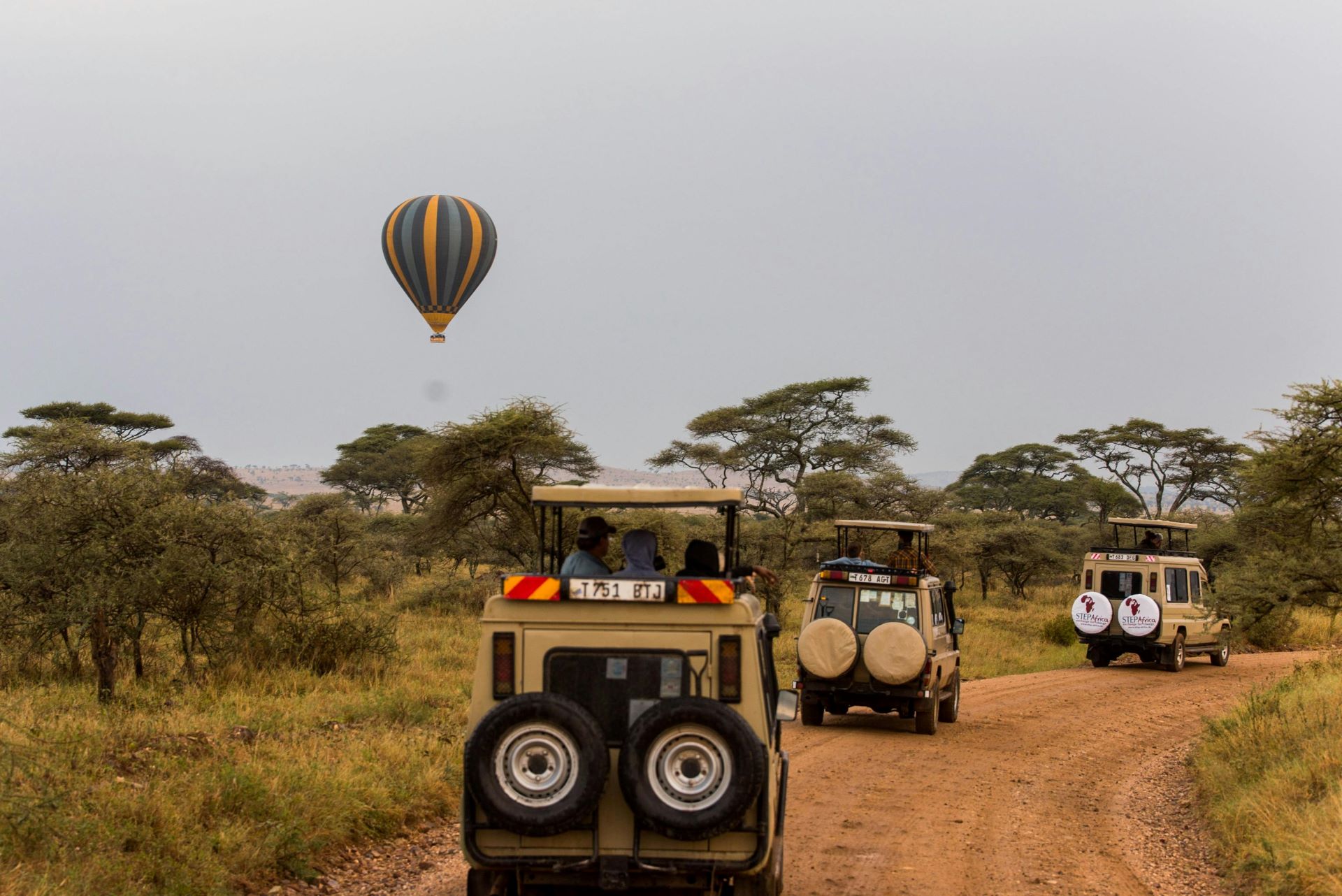
Open safari vehicles are purpose-built 4x4s with minimal enclosure. They typically feature elevated seating, no windows, and no roof or a soft canopy. These are the iconic safari jeeps seen in most photographic spreads of African wildlife tourism.
Closed safari vehicles resemble modified SUVs or minibuses. They have full roofs, glass windows, and air-conditioning. Some models include pop-up roofs or sliding windows for photography and viewing.
Both are legitimate tools of safari travel, but they create fundamentally different experiences. The vehicle becomes a lens, and each design shapes what that lens reveals or filters out.
In South African safari operations, the choice between the two is often influenced by reserve rules, safety protocols, weather conditions, and the style of guiding offered. Private game reserves frequently prefer open vehicles for their immersive quality, while self-drive tourists in national parks are typically in closed vehicles for practicality and safety.
The Open Safari Vehicle: Immersion Without a Barrier
The open safari vehicle is the closest thing to stepping directly into the landscape without leaving safety behind. It strips away glass and metal barriers, replacing them with wind, sound, and uninterrupted sightlines.
Sitting in an open vehicle in places like Kruger National Park or the private reserves of Mpumalanga, you experience the bush in its rawest form. The smell of dust rising from dry tracks, the sudden shift in temperature as the sun rises, and the distant call of birds all arrive unfiltered.
Sensory immersion and emotional proximity
One of the most defining features of open vehicles is sensory amplification. Without glass, sound travels freely. You hear the crunch of gravel under tyres, the rustle of grass when an antelope moves, and even the low rumble of distant elephants before you see them.
This creates a heightened emotional response. Wildlife feels closer, not just physically but psychologically. A leopard resting in a tree becomes part of the same shared space rather than a distant scene behind a pane of glass.
For many travellers, this is the essence of safari.
Photography advantages
Open vehicles are a favourite among photographers for one key reason: unobstructed angles. There are no reflections from glass, no glare from sunlight, and no frames limiting composition.
Guides often rotate the vehicle to position guests for optimal light and sightlines. In South Africa’s golden-hour conditions, especially in reserves like Sabi Sands or Timbavati, this flexibility can mean the difference between a good image and a once-in-a-lifetime shot.
However, it is worth noting that stability can vary. Unlike closed vehicles, open platforms are more exposed to wind movement and vibrations, especially when stationary with engines off.
Comfort considerations
Comfort in an open vehicle is highly dependent on climate and season. In cooler months, early morning drives can be surprisingly cold. Even in relatively warm regions, wind chill at dawn can cut through clothing.
In summer, the opposite challenge emerges. Heat, direct sun exposure, and dust can become significant factors, especially on long drives.
There is also the element of exposure to insects, pollen, and occasional rain. Ponchos or blankets are often provided, but the experience remains inherently more “outdoors” than enclosed alternatives.
Safety and perception
Despite appearances, open safari vehicles are extremely safe when operated by trained guides. Wildlife in South Africa’s reserves is habituated to vehicles and typically perceives them as neutral objects.
Still, psychological comfort varies between travellers. Some guests feel exhilarated by the openness, while others require time to adjust to the absence of physical barriers between themselves and large animals.
The Closed Safari Vehicle: Comfort with a Frame
Closed safari vehicles offer a different philosophy entirely. Instead of dissolving boundaries, they define them clearly. You observe the bush from within a controlled environment that prioritises comfort, stability, and climate protection.
These vehicles are especially common in self-drive tourism and in some guided experiences where long distances or variable weather make enclosure more practical.
Climate control and weather protection
One of the most significant advantages of closed vehicles is climate control. Air-conditioning or heating allows guests to maintain consistent comfort regardless of external conditions.
In South Africa, where safari regions can swing between freezing winter mornings and intense summer heat, this stability is not trivial. It allows for longer drives without physical fatigue, particularly for families or older travellers.
Rain becomes a non-issue. Dust is reduced significantly. Wind is eliminated. For many visitors, especially those on their first safari, this predictability can make the experience more accessible.
A different kind of viewing experience
Wildlife viewing from closed vehicles is more structured. Windows frame the landscape, creating a series of moving “screens” rather than an open panorama.
While this can slightly reduce immersion, it also introduces a sense of focus. You are less exposed to distractions and more anchored in observation. Many travellers find this helpful when trying to track animals across vast distances.
Pop-up roofs, common in some safari vans, bridge the gap by allowing standing views when stationary. This hybrid design is especially popular in parks where open vehicles are not permitted for self-drive tourists.
Photography limitations and adaptations
Photography from closed vehicles introduces certain constraints. Window reflections, limited angles, and fixed seating positions can restrict creative freedom.
However, experienced safari photographers often adapt by using beanbags on window frames, polarising filters, or shooting from pop-up roof sections where available.
For casual photographers, these limitations are usually minor. Modern camera technology, especially zoom lenses and image stabilisation, helps compensate for restricted movement.
Comfort for longer itineraries
Closed vehicles excel on longer travel days. When safaris involve extended transfers between regions, or full-day excursions across large reserves, the comfort of a seated, shaded, temperature-controlled environment becomes a major advantage.
This is particularly relevant in larger South African reserves where distances between sightings can be significant.
Comfort Levels Compared: The Real Trade-Off
The decision between open and closed safari vehicles is ultimately a question of comfort versus immersion, but that framing is too simplistic without unpacking what comfort actually means in a safari context.
Comfort is not only physical. It is psychological, sensory, and even emotional.
In open vehicles, comfort is dynamic. You feel the environment constantly. The wind shifts, temperatures change, and your awareness of the landscape is heightened. Some travellers interpret this as discomfort, others as authenticity.
In closed vehicles, comfort is stabilised. The environment is managed. Temperature, noise levels, and exposure are controlled. This creates predictability, which many travellers associate with relaxation.
A useful way to understand the difference is this: open vehicles place you inside the wilderness, while closed vehicles place the wilderness outside your controlled space.
Neither is superior. They are simply different translations of the same landscape.

Safari Logistics: Why Location Matters in Vehicle Choice
South Africa’s safari regions are not uniform. Terrain, road quality, and reserve regulations all influence which vehicle type is used and why.
In Kruger National Park, for example, self-drive tourism dominates, meaning closed vehicles are the norm for most visitors. Roads are well-maintained but extensive, and travellers often cover large distances independently.
In contrast, private reserves adjacent to Kruger, such as Sabi Sands or Timbavati, rely heavily on guided safaris in open vehicles. These areas prioritise intimate wildlife encounters and have off-road driving permissions that allow guides to track animals more closely.
Road conditions also play a role. Gravel tracks in private reserves can be uneven, requiring high-clearance 4x4 vehicles. Open safari vehicles are specifically designed for this, with reinforced suspension and elevated seating.
Weather patterns further influence logistics. Summer rainfall can transform tracks into muddy corridors, while winter dust can reduce visibility. Vehicle design is therefore not just about guest comfort but operational necessity.
Seasonal Considerations: The Hidden Layer of Decision-Making
Seasonality in South Africa significantly impacts safari vehicle experience.
During winter months, early mornings in open vehicles can be extremely cold. Blankets and windproof jackets become essential. However, this is also the best season for wildlife viewing due to thinner vegetation and concentrated animal activity around water sources.
In summer, closed vehicles offer respite from heat and sudden thunderstorms. However, open vehicles remain popular for their airflow and unobstructed viewing during cooler parts of the day.
The shoulder seasons often provide the most balanced conditions, where either vehicle type performs well depending on personal preference.
Travellers who underestimate seasonal variation often misjudge their comfort expectations. The same vehicle can feel entirely different depending on whether you are wrapped in winter mist or driving through humid summer bush.
Wildlife Viewing: How Vehicles Shape What You See
The type of vehicle you choose can subtly influence your wildlife encounters.
Open vehicles allow guides to scan the environment more effectively. Elevated seating and 360-degree visibility mean animals can be spotted earlier and from greater distances. This often translates into more dynamic sightings, especially in predator-rich areas.
Closed vehicles, while more limited in sensory range, still provide excellent viewing opportunities, particularly in national parks with established road networks. Many animals are habituated to vehicles of all types and behave similarly regardless of enclosure.
However, positioning matters. Open vehicles can sometimes approach sightings more flexibly in private reserves, enhancing the viewing experience. Closed vehicles are typically restricted to designated roads, which can influence proximity.
In practice, both vehicle types offer high-quality wildlife encounters in South Africa. The difference lies in how those encounters are framed rather than whether they occur.
Who Should Choose What: Matching Vehicle to Traveller Profile
Different travellers experience safari in different ways, and vehicle choice should reflect that.
Families with young children often prefer closed vehicles due to safety reassurance, climate control, and reduced exposure to environmental extremes. The structured environment helps maintain comfort over longer periods.
First-time safari travellers sometimes lean toward closed vehicles for the same reasons. Predictability reduces uncertainty, allowing them to focus on wildlife rather than environmental adaptation.
Photographers and wildlife enthusiasts tend to gravitate toward open vehicles for creative freedom and immersive experience. The ability to move with the guide’s positioning and respond to sightings quickly is a significant advantage.
Luxury travellers often encounter both formats depending on lodge style. High-end reserves may exclusively use open vehicles for game drives while providing closed transport for transfers, blending comfort with immersion.
Older travellers or those with mobility concerns may prefer closed vehicles for ease of entry, seating stability, and climate control.
Ultimately, the most satisfying choice is the one that aligns with your tolerance for exposure versus your desire for sensory depth.
Practical Safari Logistics: Time, Distance, and Movement
Safari days in South Africa are structured around light and animal behaviour rather than convenience. Early morning and late afternoon drives dominate schedules, often involving 3 to 5 hour excursions.
Open vehicles make these transitions more atmospheric but also more physically demanding. Early departures in winter can feel particularly harsh without proper clothing.
Closed vehicles reduce physical strain during these transitions, especially when multiple drives or transfers occur in a single day.
Distance also matters. In large reserves or when travelling between ecosystems, closed vehicles offer rest between sightings. Open vehicles, while immersive, require more active endurance from guests.
Logistics teams in safari operations carefully match vehicle type to itinerary design, balancing guest experience with operational efficiency.
The Psychology of Exposure: Why the Choice Feels Bigger Than It Is
Interestingly, the decision between open and closed safari vehicles often carries more emotional weight than practical difference.
For many travellers, open vehicles represent the “idea” of safari they have seen in media: raw, immediate, unfiltered nature. Closed vehicles feel more like transportation.
But in reality, both are carefully engineered tools for wildlife viewing. The emotional response is shaped as much by expectation as by experience.
Once on the ground, many visitors find that initial assumptions shift. Those who expected discomfort in open vehicles often adapt quickly. Those expecting simplicity in closed vehicles sometimes discover they crave more immersion.
This psychological adjustment is part of the safari journey itself.
Making the Right Choice: A Grounded Framework
Rather than treating the decision as binary, it helps to think in terms of priorities.
If immersion, sensory engagement, and photographic freedom are at the top of your list, open vehicles are likely the better fit.
If comfort, predictability, and environmental control matter more, closed vehicles provide a more stable experience.
Most importantly, South African safari ecosystems are designed to accommodate both. You are not locked into a single mode of experiencing the bush.
Many travellers even combine both over the course of a trip, gaining a fuller understanding of how the landscape changes through different frames.
Two Windows Into the Same Wilderness
In the end, the African bush does not change depending on the vehicle. The lions still move through golden grass. The elephants still gather at rivers. The dawn still breaks with the same quiet authority.
What changes is your relationship to it.
An open safari vehicle dissolves the boundary between observer and environment, offering immediacy and sensory richness. A closed vehicle preserves comfort and structure, allowing reflection and ease.
Both are valid interpretations of the same wilderness. Both reveal different truths.
Choosing between them is less about right or wrong and more about how you want to remember the bush: as something you watched through glass, or something you breathed in with the wind still moving through it.
Either way, South Africa delivers the same promise, written in dust, light, and the slow movement of wild things across ancient ground.