

How Conservation Shapes South Africa’s Tourism Access
Date Published
Where Wilderness Meets Regulation
South Africa’s tourism story is often told through sweeping savannahs, coastal cliffs, and the silent movement of wildlife across protected land. But behind every iconic safari moment is a carefully constructed framework of rules, restrictions, and environmental decisions that quietly shape how visitors experience these landscapes.
Wildlife conservation does not simply preserve scenery. It actively manages access to it.
From the controlled entry gates of Kruger National Park to the carefully zoned trails of Table Mountain National Park, tourism in South Africa is inseparable from conservation planning. Every road closure, permit system, or restricted area is part of a larger balancing act between ecological survival and visitor enjoyment.
Understanding this relationship is essential for anyone engaging with South African tourism, whether as a traveller, operator, or policymaker. What appears as limitation is often protection in disguise.

Conservation as a Framework for Access, Not a Barrier
At first glance, restrictions in national parks can feel like obstacles. Limited driving routes, designated viewing areas, seasonal closures, and strict entry regulations may seem to reduce freedom. Yet these measures are not arbitrary. They are designed to ensure that ecosystems remain intact under the pressure of increasing human presence.
South Africa’s protected areas operate under a simple principle: access must never exceed ecological capacity.
The governing body responsible for most of these decisions, South African National Parks, manages this balance across a wide range of environments, from dense bushveld to fragile mountain fynbos. Each ecosystem responds differently to human movement, noise, pollution, and infrastructure.
For example, off-road driving might be harmless in a controlled savannah environment but devastating in a dune-based coastal reserve. Similarly, hiking routes in mountainous regions are often rotated or closed to allow vegetation recovery and erosion control.
Conservation, in this sense, becomes a form of invisible architecture shaping every tourist experience.
Why Restrictions Exist in South African Parks
Restrictions in national parks are often misunderstood as inconvenience. In reality, they exist to manage three core pressures: environmental degradation, wildlife behaviour, and visitor safety.
Environmental degradation is perhaps the most immediate concern. Soil compaction from vehicles, litter accumulation, and uncontrolled foot traffic can permanently alter fragile ecosystems. Even seemingly harmless actions, such as walking off designated paths, can disrupt plant regeneration cycles.
Wildlife behaviour is another critical factor. Animals in reserves like Addo Elephant National Park are not static attractions. They are sensitive to noise, proximity, and predictable human patterns. Overexposure to vehicles can lead to habituation, while under-regulated interaction may cause stress or aggression.
Visitor safety completes the triad. Large predators, unpredictable terrain, and extreme weather conditions require structured movement within parks. Controlled access ensures that tourists can experience wilderness without compromising their wellbeing.
Together, these factors form the rationale behind conservation-driven access control.
The Experience of Controlled Wilderness
One of the most unique aspects of South African tourism is the paradox of controlled wilderness. Visitors enter vast landscapes that feel untamed, yet every element of their journey is guided by invisible boundaries.
In many parks, including Kruger National Park, visitors must adhere to strict gate opening and closing times. These are not arbitrary schedules but carefully calculated measures based on animal activity patterns, visibility conditions, and emergency response capabilities.
Road networks are also intentionally limited. Instead of allowing unrestricted travel, parks offer curated routes that maximise wildlife viewing opportunities while minimising ecological disturbance. This creates a structured randomness: visitors never know exactly what they will see, but they are always guided toward areas where sightings are most likely without overwhelming the ecosystem.
Even picnic sites and rest camps are strategically placed. These nodes of human activity act as containment zones, preventing widespread dispersion into sensitive habitats.
What emerges is a curated wilderness experience, where conservation quietly directs the rhythm of tourism.
Case Study: Kruger National Park and Zonal Management
Kruger National Park is one of the clearest examples of conservation-driven tourism management in Africa. Its vast scale requires a highly structured system of zones, each with different levels of accessibility and ecological sensitivity.
The park is divided into regions that respond differently to rainfall, vegetation density, and wildlife distribution. Some areas are open to self-drive tourism, while others are reserved for guided safaris or research activity only.
This zoning system ensures that high-traffic areas do not become ecologically degraded while still allowing visitors to experience abundant wildlife sightings.
Road closures in Kruger are often seasonal, reflecting flood patterns or breeding cycles. During the rainy season, certain gravel roads become impassable or ecologically vulnerable. Closing them prevents long-term damage and allows natural recovery.
The result is a dynamic tourism landscape that changes throughout the year. Visitors returning in different seasons often experience entirely different park configurations, reinforcing the idea that conservation is an active process rather than a static condition.
Case Study: Addo and the Density of Elephant Management
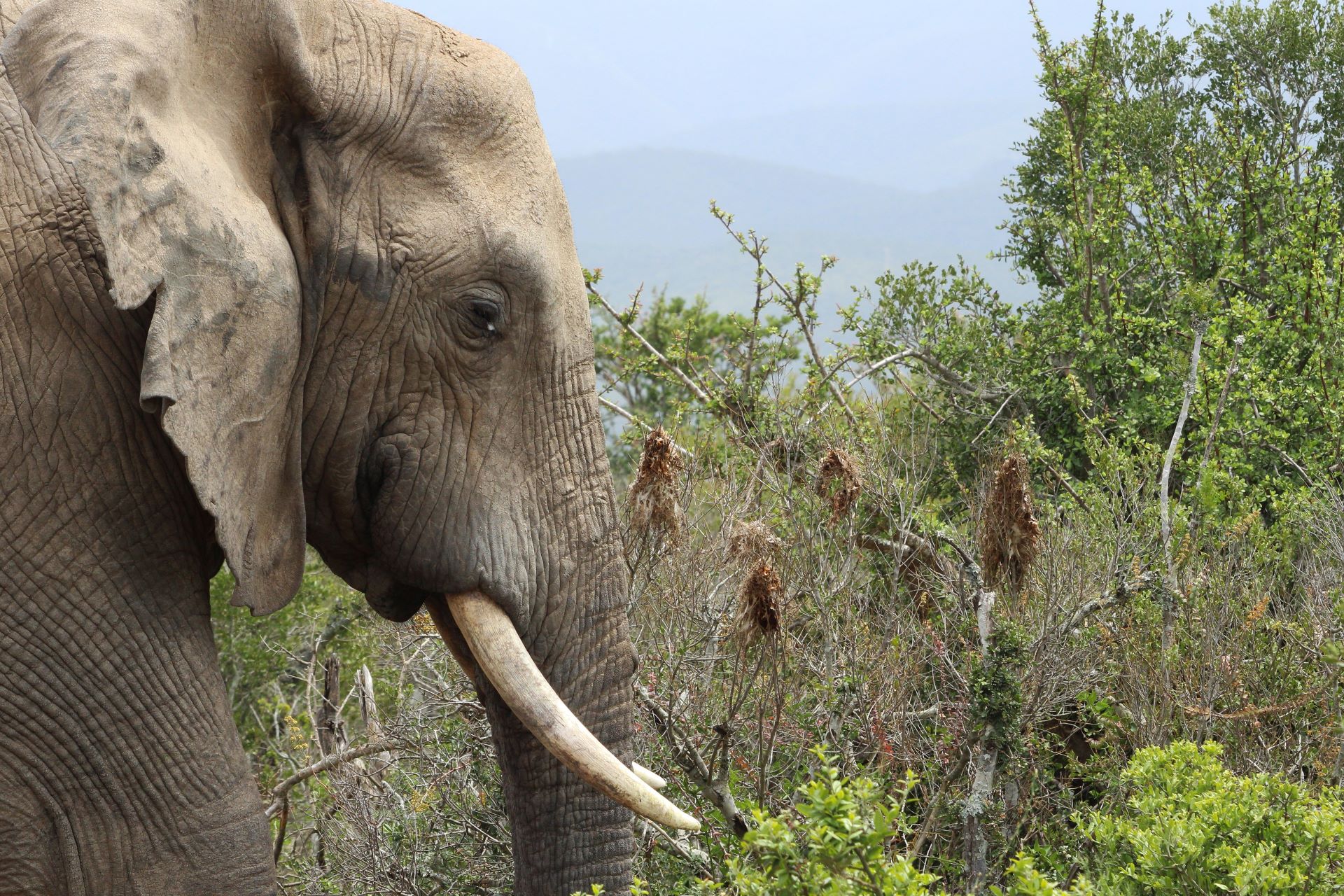
In Addo Elephant National Park, conservation directly influences how visitors encounter one of the densest elephant populations in the world.
Unlike open-range safari experiences where animals are widely dispersed, Addo’s conservation success has created a high-density elephant environment. This brings both opportunity and challenge.
From a tourism perspective, sightings are highly reliable. However, management must carefully regulate movement patterns to prevent habitat overuse. Certain areas are periodically closed to allow vegetation recovery, particularly in zones heavily impacted by elephant grazing and tree pushing behaviour.
Speed limits within the park are strictly enforced, not only for safety but to reduce stress on animals that are frequently exposed to vehicles.
The result is a tightly managed ecosystem where access is predictable, but ecological pressure is carefully redistributed across the landscape.
Case Study: Table Mountain and Urban-Nature Boundaries
Table Mountain National Park presents a different conservation challenge altogether. Unlike remote wilderness parks, it exists within and above a major urban environment.
Here, conservation restrictions are shaped by proximity to human settlement, fire risk, and biodiversity sensitivity. The park contains multiple access points, many of which lead into fragile fynbos ecosystems that are highly susceptible to erosion and invasive species.
Certain trails are closed seasonally to prevent degradation during wet months when soil is most vulnerable. Fire management is also a critical factor, with controlled burns and temporary closures used to reduce wildfire risk.
Tourism access is therefore highly fluid. A trail open one week may be closed the next due to weather conditions or ecological assessments.
This constant recalibration ensures that urban tourism does not overwhelm one of the world’s most unique floral kingdoms.

Visitor Impact: How Restrictions Shape Experience
Conservation restrictions do more than protect ecosystems. They actively shape the emotional and sensory experience of visitors.
Limited access often increases anticipation. When routes are restricted, sightings become more meaningful because they occur within a structured system of rarity and timing.
Controlled movement also enhances immersion. Instead of chaotic exploration, visitors experience a curated unfolding of landscapes. Wildlife encounters feel more intentional, even though they remain naturally occurring.
However, restrictions can also create frustration, especially when visitors are unaware of the reasoning behind them. Road closures or permit limitations may feel arbitrary without proper interpretation.
This highlights the importance of communication. Parks that effectively explain conservation logic tend to create more satisfied visitors, even when access is limited.
In essence, understanding transforms restriction into appreciation.
Economic Trade-Offs in Conservation Tourism
Tourism is a major contributor to South Africa’s economy, and conservation-driven restrictions inevitably influence revenue patterns.
Limited access can reduce visitor volume in certain areas, particularly when closures are extensive or prolonged. However, this is often offset by increased long-term sustainability of attractions.
Overexploited parks risk losing biodiversity, which ultimately diminishes tourism appeal. A degraded ecosystem attracts fewer visitors, reducing economic returns over time.
By contrast, well-managed conservation areas maintain consistent wildlife populations and landscape integrity, ensuring sustained tourism interest.
This creates a long-term economic model based on preservation rather than maximisation.
Operators and policymakers must therefore navigate a delicate balance: allowing enough access to generate income while maintaining strict ecological thresholds.
Community and Local Development Considerations
Conservation policies also have direct implications for surrounding communities. Many South African reserves operate within or near rural settlements, where tourism provides employment and economic opportunities.
Restrictions on access can influence job availability, guiding opportunities, and local supply chains. However, they also ensure that tourism remains viable in the long term, protecting these same economic opportunities from collapse due to environmental degradation.
Community-based tourism initiatives often bridge this gap by involving local populations in conservation management, guiding services, and cultural experiences.
This integration helps ensure that conservation is not perceived as exclusionary but as a shared resource system that benefits both ecosystems and people.
Technology and Modern Park Management
Modern conservation management increasingly relies on technology to refine access decisions.
Satellite monitoring, drone surveillance, and GPS tracking allow park authorities to assess environmental conditions in real time. This data informs decisions about road closures, fire management, and wildlife movement corridors.
Visitor data analytics also play a role. By tracking traffic patterns, authorities can identify high-pressure zones and redistribute visitor flow more effectively.
Digital booking systems have further improved access control, allowing parks to manage carrying capacity without physically turning visitors away at gates.
These innovations make conservation more responsive, precise, and adaptive than ever before.
The Future of Conservation-Led Tourism
Looking ahead, South African tourism is likely to become even more closely aligned with ecological thresholds.
Climate change, population pressure, and biodiversity loss will require increasingly dynamic management systems. Parks may operate with more flexible access models, where visitor routes change based on environmental conditions in real time.
There is also a growing emphasis on low-impact tourism. Smaller group sizes, longer stays, and more immersive experiences are becoming central to conservation-friendly travel design.
Rather than expanding access indefinitely, the future may focus on deepening quality within controlled limits.
This shift represents a fundamental rethinking of tourism itself: from quantity of visitors to quality of experience and ecological compatibility.
Access as a Living System
Wildlife conservation in South Africa does not restrict tourism in a simple sense. It reshapes it into something more structured, more intentional, and ultimately more sustainable.
Every gate, closure, and regulation is part of a living system designed to preserve the very landscapes that attract visitors in the first place.
From Kruger’s vast safari networks to the fragile mountain trails of Table Mountain, access is continuously negotiated between human curiosity and ecological necessity.
What emerges is not a limitation of experience, but a refinement of it. Conservation ensures that South Africa’s natural heritage remains not only visible, but viable for generations to come.
In this way, tourism access is not reduced by conservation. It is redesigned by it.