

The Garden Route vs Wild Coast: Two Very Different Coastal Worlds
Date Published
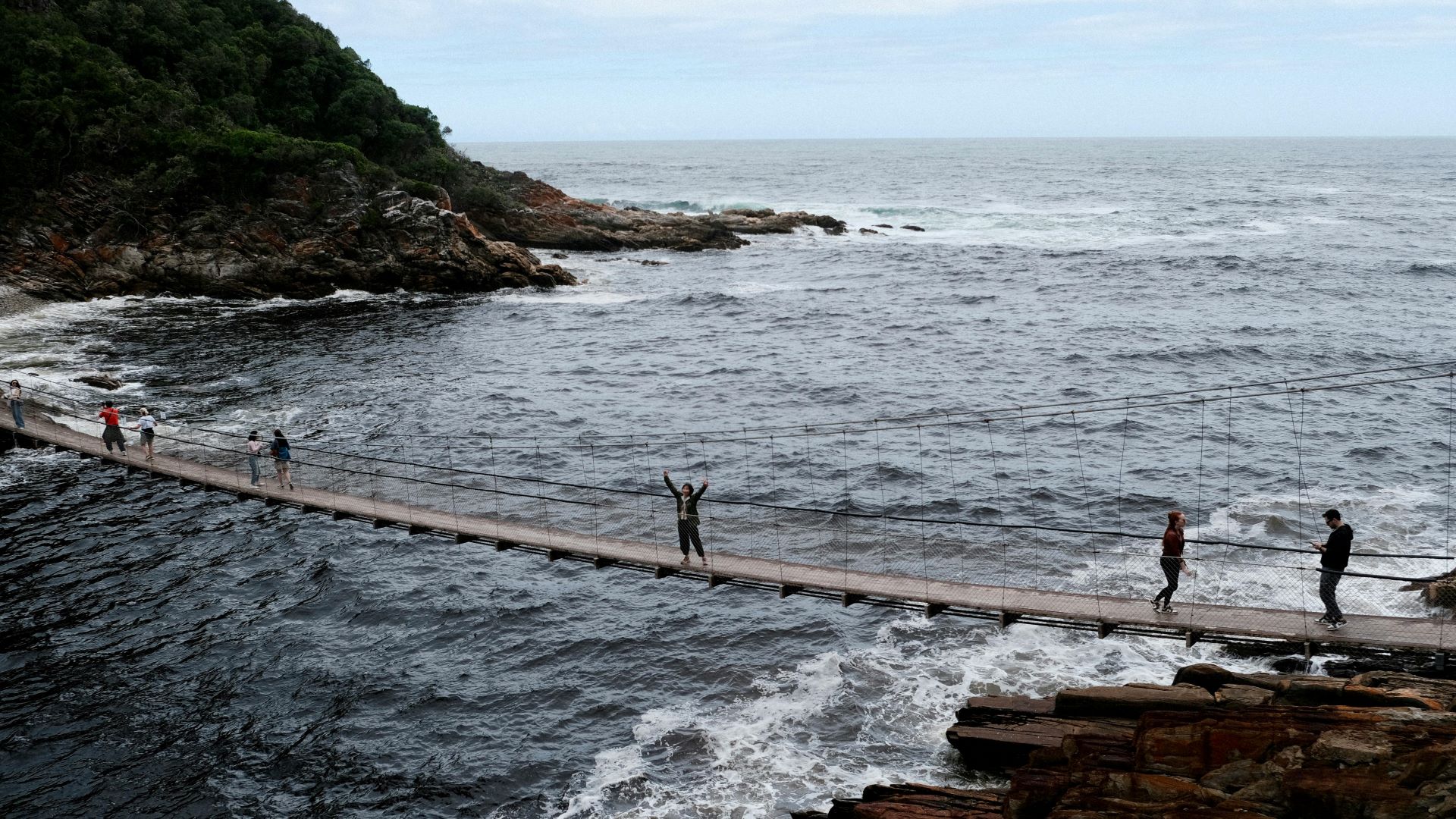
A coastline split into two philosophies
South Africa’s coastline does not behave like a single continuous experience. It shifts personalities, almost like it is changing dialects. Nowhere is this more evident than when comparing the Garden Route and the Wild Coast. Both are iconic, both are deeply scenic, and both sit within relatively close geographical proximity along the southern and eastern edges of the country. Yet they feel as if they belong to different travel eras entirely.
The Garden Route is often described as polished and accessible, a stretch of coastline shaped by decades of tourism development, strong road infrastructure, and a rhythm that caters comfortably to self-drive travellers, families, and international visitors. The Wild Coast, by contrast, is untamed in both landscape and logistics. It is a region where access is not simply a matter of distance but of terrain, road quality, weather conditions, and a slower infrastructural cadence that reflects its rural Eastern Cape context.
This contrast is not about superiority. It is about structure, intention, and history. One region was shaped with tourism integration in mind. The other evolved organically, with communities, geography, and limited infrastructure guiding its trajectory. Together, they form a kind of dual narrative of South African coastal tourism: one accessible and engineered, the other raw and immersive.
To understand these regions properly is to understand how infrastructure itself shapes the travel experience.

The Garden Route: A coastal system built for movement
The Garden Route stretches broadly between Mossel Bay and Storms River, weaving through towns such as George, Knysna, Plettenberg Bay, Wilderness, and Nature’s Valley. At its core lies the N2 highway, one of South Africa’s most important transport arteries, which functions almost like a spine connecting the region.
This road is not just a convenience. It is the defining feature of the Garden Route’s tourism identity. The N2 allows travellers to move fluidly between towns in a matter of minutes or hours, making it possible to experience multiple ecosystems, beaches, forests, lagoons, and attractions within a single trip without logistical strain.
Infrastructure in the Garden Route is highly developed by South African standards. Road surfaces are generally well maintained, signage is consistent, and fuel stations, supermarkets, medical facilities, and accommodation options are widely distributed. This creates a predictable travel environment, which is a major reason the region is often recommended for first-time visitors to South Africa.
Town planning also plays a role. Settlements are structured around tourism flow. Knysna’s waterfront, Plettenberg Bay’s beachfront developments, and George’s role as a logistical hub all contribute to a region that feels interconnected rather than isolated.
Even secondary roads into nature reserves or coastal viewpoints are typically tarred or well-graded gravel. While traffic can increase significantly during holiday seasons, especially December and Easter, the overall infrastructure supports high visitor volumes without significant breakdown in accessibility.
From a tourism perspective, the Garden Route behaves like a network. You do not have to commit to isolation or difficulty to experience nature. Instead, nature is packaged alongside comfort and mobility.
This is where its accessibility becomes its defining feature. You can land in George Airport, rent a car, and within an hour be walking forest trails or standing on cliffside viewpoints overlooking the Indian Ocean. The transition from airport to wilderness is seamless, almost engineered.
It is a region designed for flow.
The Wild Coast: Geography as gatekeeper
The Wild Coast, stretching through the Eastern Cape from roughly East London up toward the KwaZulu-Natal border, presents an entirely different travel logic. It is part of the former Transkei region, and its infrastructure reflects both historical underinvestment and a landscape that resists easy development.
Where the Garden Route is structured around the N2, the Wild Coast is defined by fragmentation. Access routes are fewer, roads are less consistent, and travel times are often longer than distances would suggest. What looks close on a map can take hours in practice due to road conditions, winding inland detours, or river crossings.
The geography itself is a major factor. Deep river valleys, rolling coastal hills, and remote beachfront settlements mean that direct coastal highways are rare. Instead, access often requires moving inland before looping back toward the coast.
The result is a travel experience that feels less like a continuous drive and more like a series of intentional arrivals.
Infrastructure varies significantly depending on the area. Major towns such as Mthatha act as key gateways, offering airports, hospitals, and commercial centres. However, once moving into more remote coastal villages like Coffee Bay, Port St Johns, or Dwesa, the infrastructure becomes more limited.
Road surfaces shift frequently between tar, gravel, and rough rural tracks. After heavy rains, certain routes can become slow or challenging, particularly for low-clearance vehicles. Signage may be minimal, and GPS reliability can vary in deeply rural zones where network coverage drops.
This does not make the Wild Coast inaccessible in a strict sense. Rather, it makes it conditional. Access depends on planning, vehicle choice, weather awareness, and a willingness to adapt travel expectations.
Unlike the Garden Route, where movement is fluid, the Wild Coast asks for negotiation with the landscape.
Yet this very limitation is part of its appeal. Because infrastructure does not dominate the experience, nature remains visually and experientially uninterrupted. Cliffs drop into ocean without resort skylines. Beaches stretch without commercial density. Villages remain rooted in local rhythm rather than tourism architecture.
The Wild Coast is not built for efficiency. It is built for presence.
Accessibility compared: Ease versus immersion
When comparing the Garden Route and the Wild Coast, accessibility becomes the most defining dividing line. It is not just about how to get there, but how travel behaves once you are inside the region.
The Garden Route offers predictability. Travel times align closely with expectations. Road conditions are stable. Services are frequent. This creates a low-friction environment where visitors can focus on activities rather than logistics.
In contrast, the Wild Coast introduces variability. A 50-kilometre drive might take an hour or three depending on conditions. Fuel stops may be sparse in certain stretches. Weather can directly influence route viability, particularly in rural gravel sections that become slippery or eroded.
Air access also highlights the difference. The Garden Route benefits from George Airport, which connects directly to major hubs such as Cape Town and Johannesburg. This shortens the entry point into tourism dramatically. Visitors can be in nature within a short transfer.
The Wild Coast relies more heavily on Mthatha Airport as a gateway. While functional, it serves fewer routes and often requires more complex travel planning. Many visitors still arrive by road from East London or Durban, extending the travel time before the tourism experience even begins.
Accommodation distribution also plays into accessibility. The Garden Route offers a dense network of hotels, guesthouses, resorts, and boutique lodges across multiple towns. You rarely need to travel far for options.
The Wild Coast offers fewer, more dispersed accommodations. Lodges and guesthouses are often located in remote settings, requiring specific directions and sometimes off-road travel. Booking often comes with additional travel instructions rather than just a street address.
Even mobile connectivity plays a subtle role. The Garden Route maintains relatively strong network coverage along most main routes. The Wild Coast has pockets of weak signal, particularly in valleys and coastal inlets, reinforcing its sense of remoteness.
This contrast creates two entirely different travel behaviours. The Garden Route encourages spontaneous detours. The Wild Coast rewards preparation.
One is elastic and forgiving. The other is textured and demanding.
Infrastructure in detail: Roads, services, and support systems
Infrastructure is often invisible until it becomes necessary. In the Garden Route, it is quietly reliable. Roads are maintained to accommodate both local traffic and continuous tourism flow. The N2 is well marked, and connecting routes to attractions are generally in good condition.
Emergency services are relatively accessible across the region. Hospitals and clinics are distributed across major towns like George and Knysna. Fuel stations are frequent, and roadside assistance is well established due to the region’s tourism economy.
This creates a safety net that allows for flexibility in travel planning. Visitors can adjust routes, extend stays, or change plans without significant logistical risk.
The Wild Coast operates on a different infrastructure rhythm. Road maintenance is uneven, reflecting both budget allocation and the challenges of terrain. Some sections have seen upgrades in recent years, particularly connecting key towns, but many rural roads remain gravel-based and weather-dependent.
Healthcare access is centralised in larger towns such as Mthatha, with smaller clinics serving rural communities. This means longer travel times in emergencies compared to the Garden Route.
Service distribution is also less dense. Fuel stations can be spaced far apart, requiring travellers to plan refuelling carefully. This is particularly important when travelling toward remote coastal villages.
Telecommunications infrastructure is improving, but not uniform. In some areas, connectivity drops sharply just a few kilometres outside town centres. This affects navigation, communication, and even accommodation coordination.
However, infrastructure in the Wild Coast is not absent. It is simply layered differently. It prioritises essential connectivity over tourism density. The result is a system that functions, but requires awareness and adaptability from visitors.
Transport experience: The act of moving through space
Driving in the Garden Route feels structured. Roads curve through forests, coastal cliffs, and towns in a way that feels choreographed. Signage appears frequently enough to reassure even unfamiliar drivers. The experience is scenic but controlled.
Public transport exists but is not central to tourism. Most visitors rely on rental cars, which are easy to hire in George or Cape Town before entering the region.
In the Wild Coast, transport becomes part of the adventure rather than just a means of movement. A standard sedan can handle many main routes, but higher clearance vehicles are often recommended for deeper rural access.
Driving requires attention not just to navigation but to road texture. Gravel patches, livestock crossings, and unmarked turns are part of the environment. Travel speeds are naturally lower, not just because of road conditions but because of constant visual engagement with the landscape.
Local transport exists in the form of taxis and minibus services connecting towns and villages, but these are not primarily designed for tourism navigation. Visitors often rely on private transfers or self-driving with careful planning.
What stands out most is that travel time becomes elastic. In the Garden Route, time is a schedule. In the Wild Coast, time is a condition.
Tourism experience: Comfort versus continuity with nature
The Garden Route offers a layered tourism experience. You can stay in luxury resorts, visit adventure parks, hike forest trails, or dine in high-end restaurants, all within short driving distances. The region supports variety within a compact geographical space.
It is ideal for travellers who want nature without sacrificing convenience. A morning hike can be followed by an afternoon wine tasting or a beachfront dinner without logistical strain.
The Wild Coast offers a more continuous experience. Rather than shifting between curated activities, visitors tend to remain immersed in a single environment for longer periods. Beaches, cliffs, and villages become the primary focus rather than a sequence of attractions.
This creates a slower rhythm. Days are shaped more by weather, tides, and local interaction than by planned itineraries.
Accommodation reinforces this difference. Garden Route stays often feel integrated into a broader hospitality network. Wild Coast stays often feel more isolated, with lodges positioned to maximise natural immersion rather than proximity to services.
Both experiences are valuable, but they appeal to different travel instincts.
Development trajectory: Two regions moving at different speeds
The Garden Route continues to evolve as a mature tourism corridor. Infrastructure upgrades, property development, and increasing international recognition have reinforced its position as one of South Africa’s most accessible scenic routes.
The Wild Coast, meanwhile, is gradually undergoing infrastructural improvement, particularly in road connectivity and tourism development initiatives. However, progress is uneven due to environmental constraints, funding limitations, and the challenge of balancing development with cultural and ecological preservation.
There is a deliberate sensitivity in many development projects in the Wild Coast, as the region is home to deeply rooted rural communities and environmentally significant coastal systems.
This means that growth is not simply about building more infrastructure, but about integrating it responsibly into existing landscapes.
The Garden Route, by contrast, has already undergone much of its foundational development. Its current trajectory focuses more on enhancement than expansion.

Two versions of the same coastline story
The Garden Route and the Wild Coast are not opposites in a strict sense. They are expressions of the same coastline filtered through different conditions of access, infrastructure, and historical development.
The Garden Route offers continuity. It allows travellers to move easily, predictably, and comfortably through a sequence of landscapes and towns. It is a region where infrastructure supports experience at every step.
The Wild Coast offers interruption. It removes some of the structural conveniences of travel and replaces them with immersion, unpredictability, and a stronger sense of place.
Neither is inherently better. They simply ask different things from the traveller.
One invites movement. The other invites attention.
Together, they form one of the most contrasting and compelling coastal narratives in South African tourism, a reminder that distance is not only measured in kilometres, but in the shape of the road that carries you there.